Malta information hub
History of Malta
A chronological history of Malta: prehistoric temples, Phoenicians and Romans, the Arab period, the Knights of St John and the Great Siege, French and British rule, the world wars, independence, the Republic and EU membership.
Personalise this guide (stays on your device)
Malta's position in the middle of the Mediterranean has made it a crossroads for seven millennia. The timeline below follows the main periods; each entry cites its source, and the heritage sites linked from it can be visited today.
Timeline of Malta's history
Dates follow the cited sources; prehistoric dates are approximate ranges based on published archaeological chronologies.
Prehistoric & megalithic
c. 5900 BC
First farming settlers arrive from Sicily
Neolithic farmers cross from Sicily; the Għar Dalam phase is the earliest evidence of settlement on the islands.
Heritage Malta (national agency for museums and heritage) · verified 01 Oct 2026
c. 3600–2500 BC
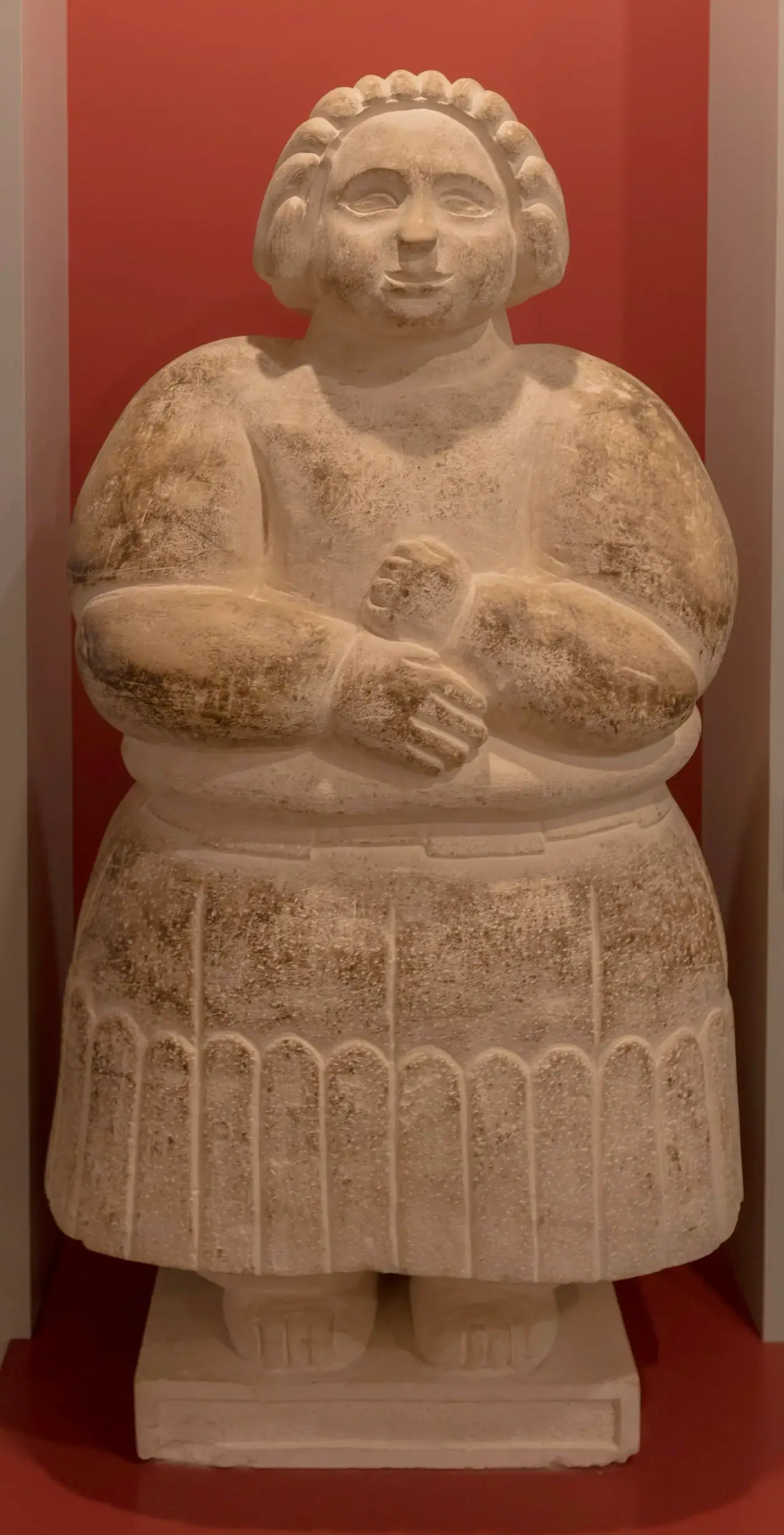
Ġgantija, Ħaġar Qim, Mnajdra, Tarxien and the Ħal Saflieni Hypogeum are built: among the world's oldest free-standing monuments, now UNESCO World Heritage Sites.
UNESCO World Heritage Centre · verified 01 Oct 2026
Phoenician & Punic
c. 8th–7th century BC
Phoenician settlement
Phoenician traders settle the islands, followed by Carthaginian (Punic) control; the name Malta is thought to derive from this period.
Heritage Malta (national agency for museums and heritage) · verified 01 Oct 2026
Roman & Byzantine
218 BC
Rome takes Malta from Carthage during the Second Punic War; the town of Melite (Mdina–Rabat) flourishes, and tradition places St Paul's shipwreck on the island in AD 60.
Heritage Malta (national agency for museums and heritage) · verified 01 Oct 2026
Arab period
AD 870
Arab conquest
The Aghlabids take Malta from the Byzantines; the Arab period shapes the Maltese language, place names and agriculture.
Heritage Malta (national agency for museums and heritage) · verified 01 Oct 2026
Norman & medieval
1091
Roger I of Sicily brings Malta under Norman rule; the islands follow Sicily under successive European dynasties for four centuries.
Heritage Malta (national agency for museums and heritage) · verified 01 Oct 2026
Knights of St John
1530
The Knights of St John receive Malta
Emperor Charles V grants Malta to the Order of St John; the Knights settle in Birgu and fortify the Grand Harbour.
Heritage Malta (national agency for museums and heritage) · verified 01 Oct 2026
May–September 1565
An Ottoman force besieges the Knights and the Maltese for nearly four months; Fort St Elmo falls but the siege is lifted on 8 September, now Victory Day.
Heritage Malta (national agency for museums and heritage) · verified 01 Oct 2026
28 March 1566
Grand Master Jean de Valette lays the foundation stone of a new fortified capital on the Sceberras peninsula.
UNESCO World Heritage Centre · verified 01 Oct 2026
French occupation
June 1798 – September 1800
Napoleon takes Malta
The French expel the Knights; a Maltese uprising with British naval support ends French rule after a two-year blockade.
Heritage Malta (national agency for museums and heritage) · verified 01 Oct 2026
British rule
1814 (Treaty of Paris)
Malta becomes a British possession
British rule, in practice since 1800, is confirmed; Malta becomes a key naval base and the dockyard the largest employer.
Heritage Malta (national agency for museums and heritage) · verified 01 Oct 2026
7 June 1919
Sette Giugno riots
Protests over bread prices and political rights leave four dead; the events lead to the 1921 self-government constitution. 7 June is a national day.
Government of Malta — Laws of Malta · verified 01 Oct 2026
15 April 1942
The George Cross awarded to Malta
King George VI awards the George Cross to the people of Malta for their endurance under siege and bombardment in World War II; it appears on the national flag.
Government of Malta — Laws of Malta · verified 01 Oct 2026
Independence & Republic
21 September 1964
Independence
Malta becomes an independent state within the Commonwealth; the Maltese Citizenship Act of the same date creates Maltese citizenship.
Government of Malta — Laws of Malta · verified 01 Oct 2026
13 December 1974
Malta becomes a republic
The Constitution is amended to make Malta a republic with a President as head of state.
Government of Malta — Laws of Malta · verified 01 Oct 2026
31 March 1979
Last British forces leave
The military base agreement ends and the last British forces depart; 31 March is Freedom Day (Jum il-Ħelsien).
Government of Malta — Laws of Malta · verified 01 Oct 2026
EU membership & modern Malta
1 May 2004
Malta joins the European Union
Following a 2003 referendum and the European Union Act (Cap. 460), Malta becomes an EU member state.
Government of Malta — Laws of Malta · verified 01 Oct 2026
21 December 2007
Malta joins the Schengen area
Border controls with other Schengen states are lifted.
European Union (european-union.europa.eu) · verified 01 Oct 2026
1 January 2008
Malta adopts the euro
The euro replaces the Maltese lira.
European Union (european-union.europa.eu) · verified 01 Oct 2026
2018
Valletta, European Capital of Culture
Valletta holds the European Capital of Culture title, with major restoration of the city's monuments.
Heritage Malta (national agency for museums and heritage) · verified 01 Oct 2026
29 March 2021
Malta Permanent Residence Programme launched
The MPRP Regulations (L.N. 121 of 2021) replace the earlier Malta Residence and Visa Programme.
Government of Malta — Government Gazette · verified 01 Oct 2026
Heritage and cultural sites
All sites →Temple · UNESCO World Heritage
Ħaġar Qim and Mnajdra Temples
Qrendi · c. 3600–3200 BC
Two megalithic temple complexes on the southern cliffs, part of the UNESCO Megalithic Temples of Malta. Ħaġar Qim is built of globigerina l…
Temple · UNESCO World Heritage
Ġgantija Temples
Xagħra · c. 3600–3200 BC
The oldest of Malta's megalithic temples and among the world's oldest free-standing monuments, on a plateau in Xagħra, Gozo, with an interp…
Archaeological Site · UNESCO World Heritage
Ħal Saflieni Hypogeum
Paola · c. 4000–2500 BC
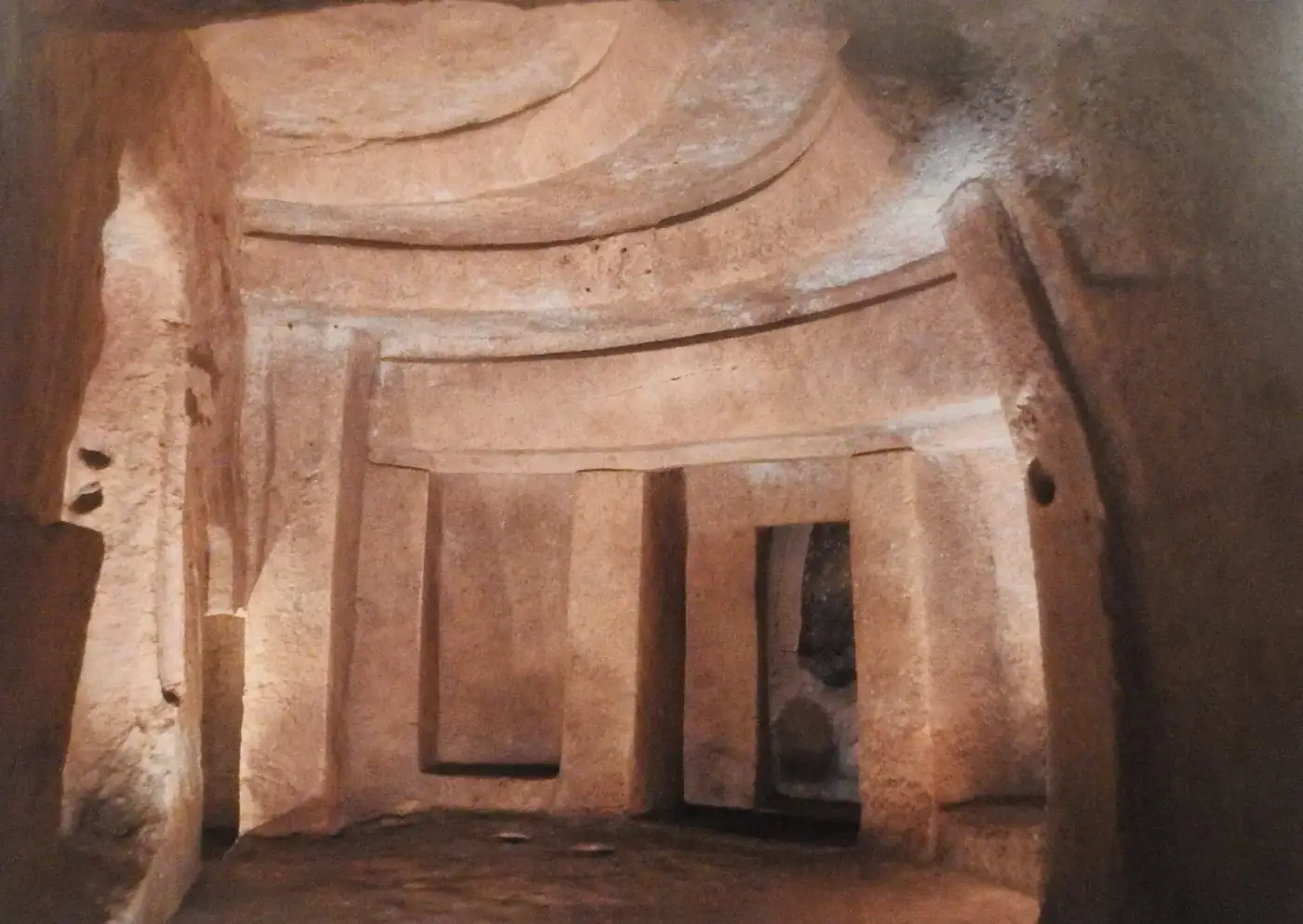
An underground prehistoric burial complex carved from rock on three levels. Visitor numbers are strictly limited and advance booking is ess…
Temple · UNESCO World Heritage
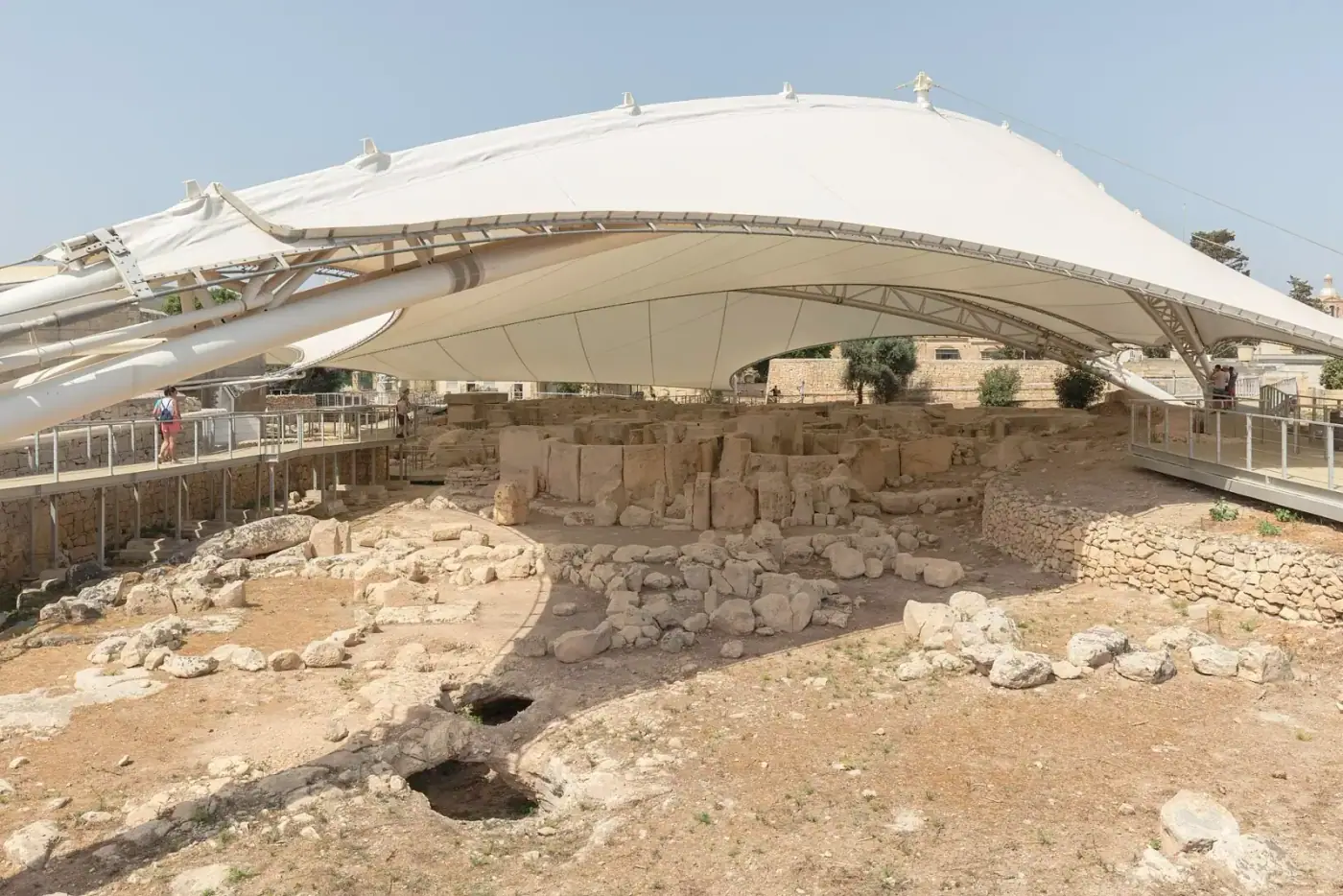
Tarxien Temples
Tarxien · c. 3600–2500 BC
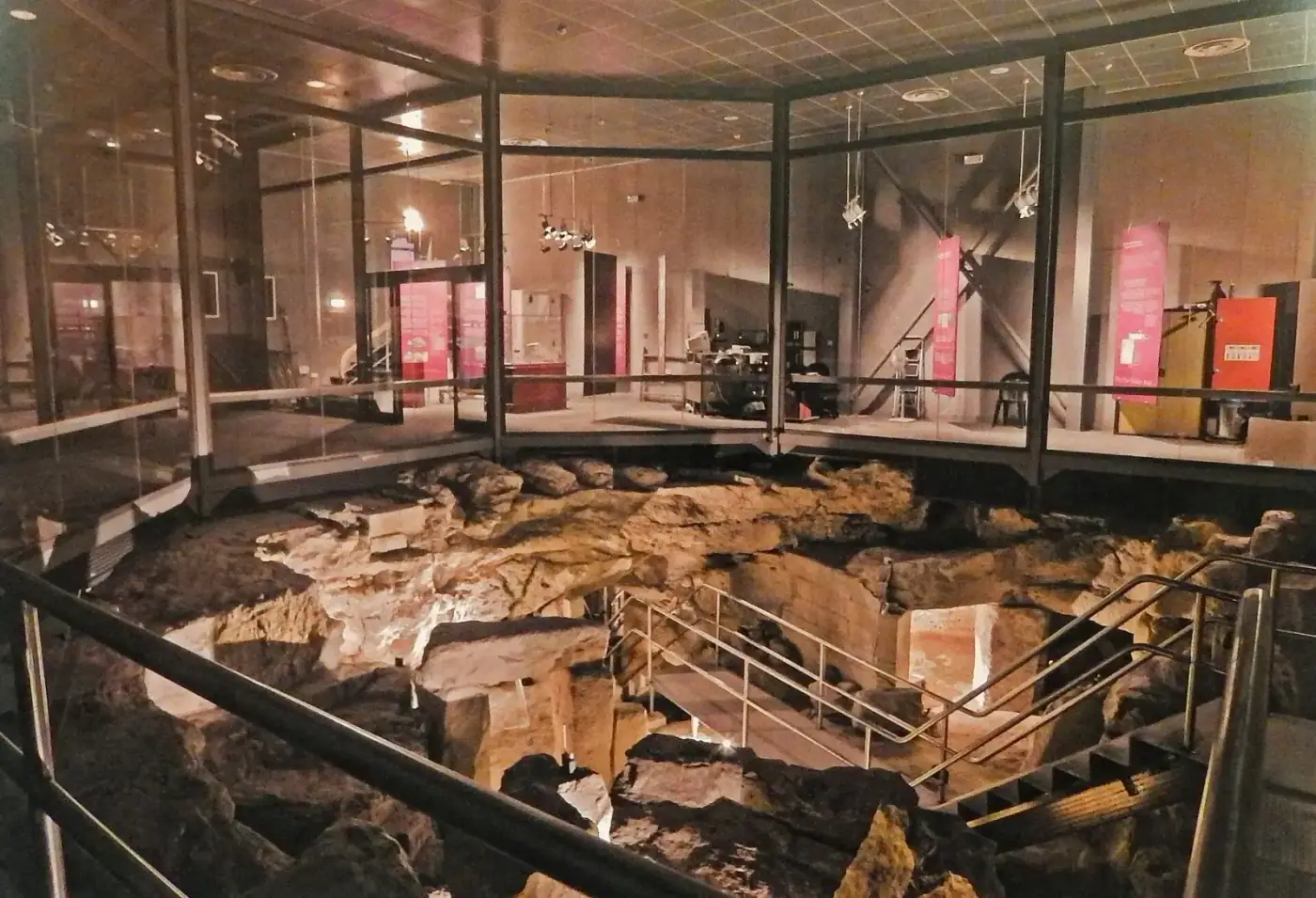
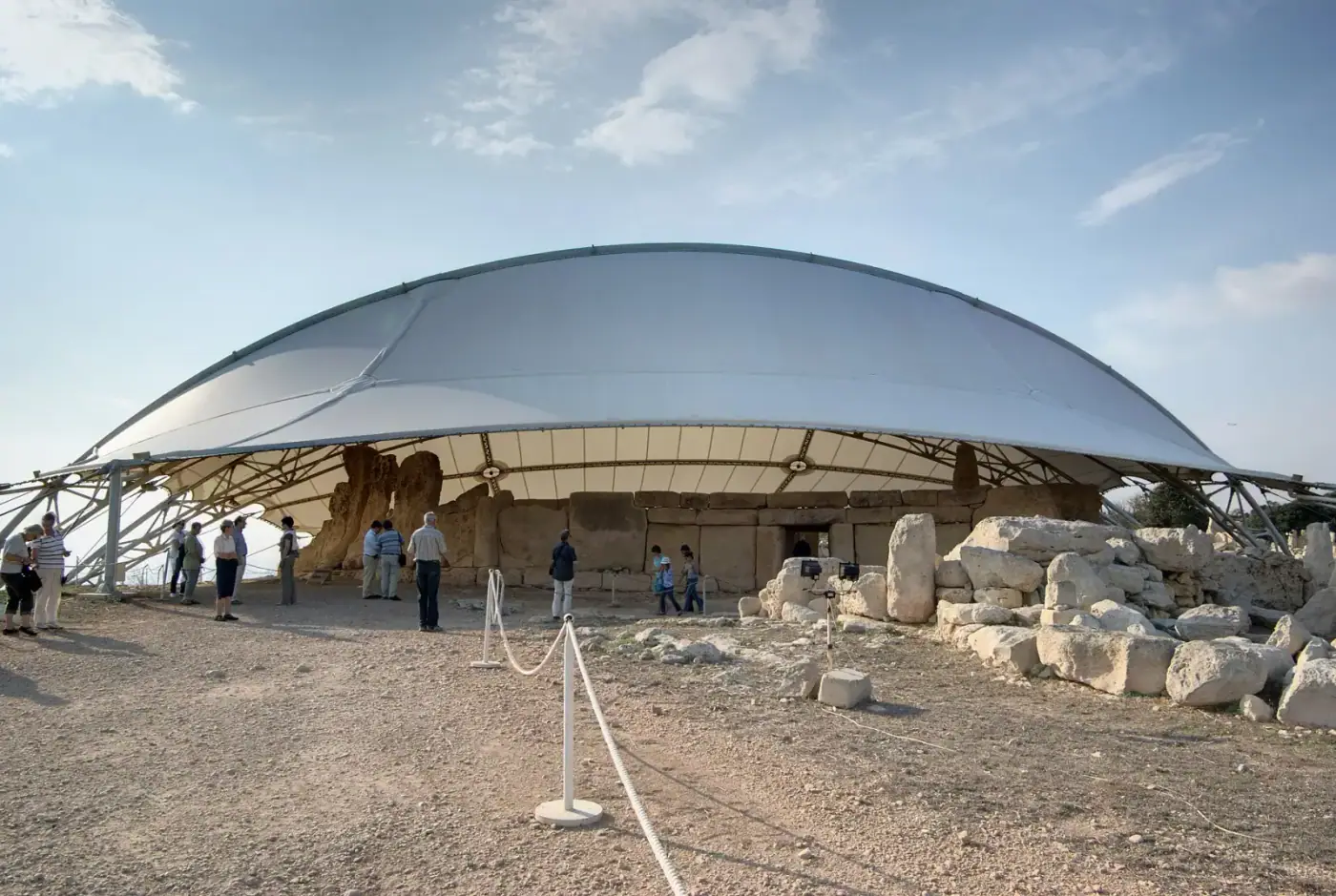
A complex of four megalithic structures with the richest carved decoration of any Maltese temple, now under a protective canopy. UNESCO Wor…
Historic Building · UNESCO World Heritage
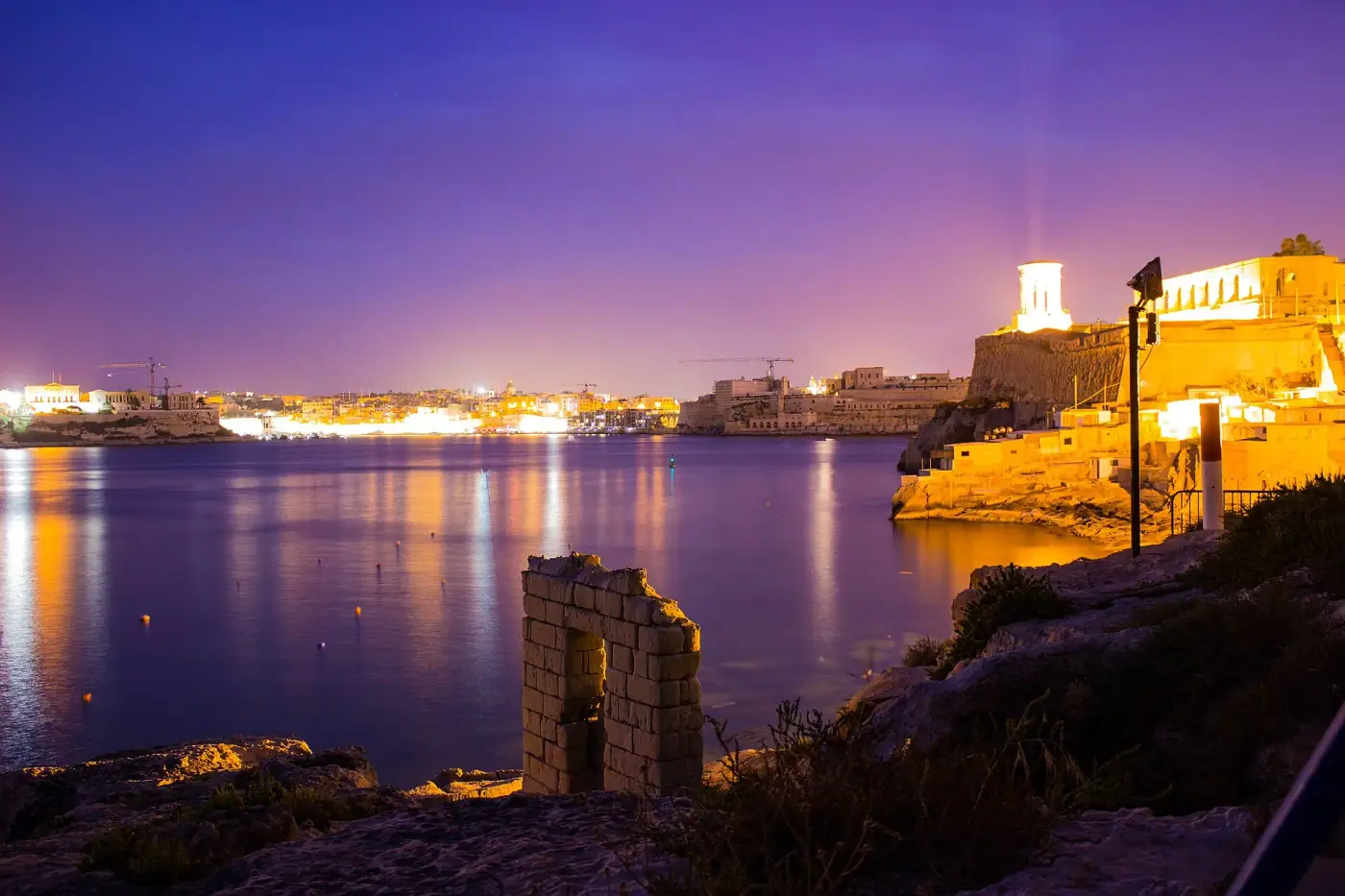
City of Valletta (World Heritage Site)
Valletta · Founded 1566
The fortified capital built by the Knights of St John after the Great Siege, inscribed as a whole on the UNESCO World Heritage List in 1980…
Church
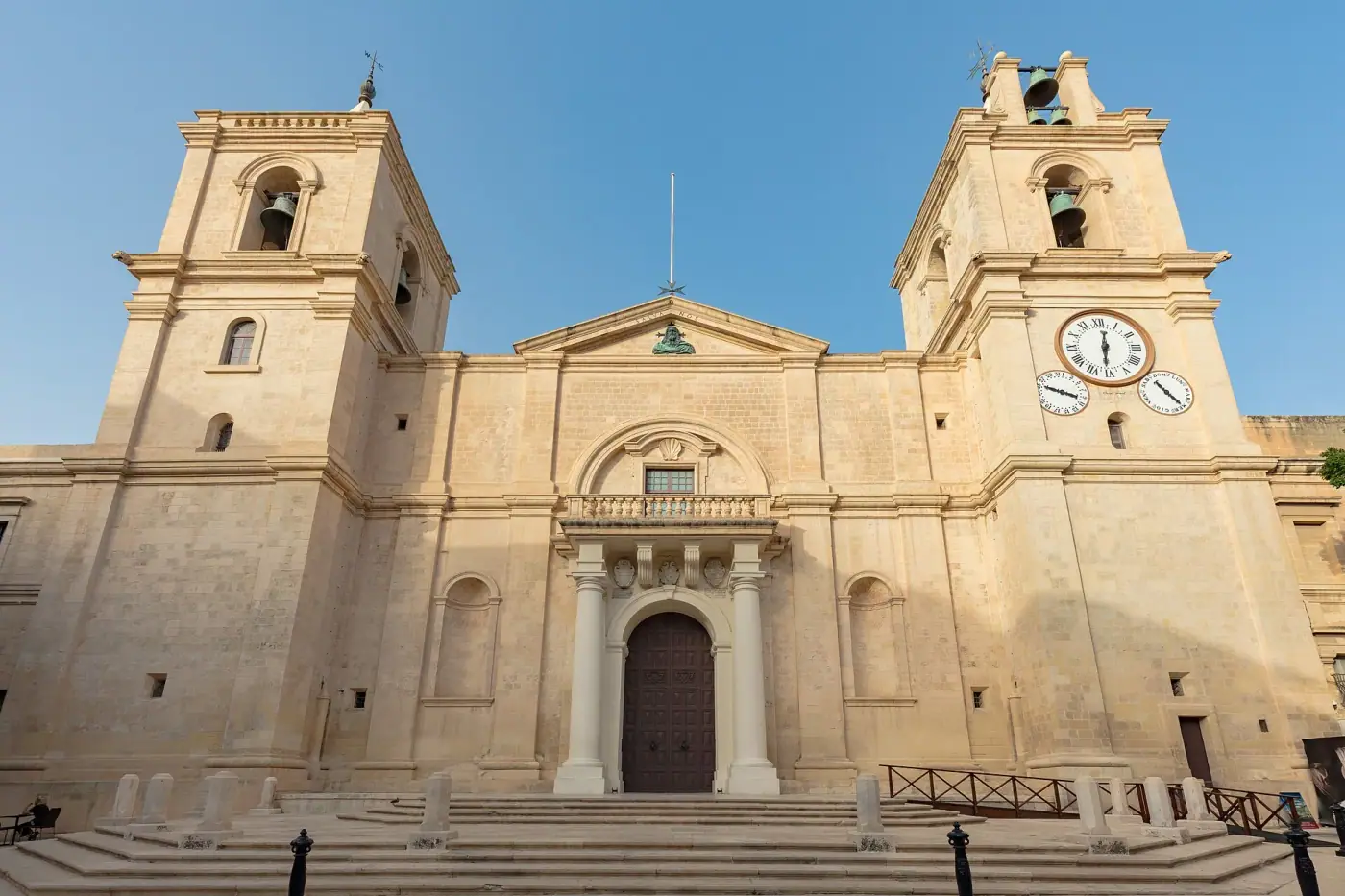
St John's Co-Cathedral
Valletta · 1572–1577; baroque interior 17th century
The conventual church of the Knights of St John, with a baroque interior by Mattia Preti, inlaid marble tombstones and Caravaggio's Beheadi…
Why the history matters for residents
The legal system mixes Roman-civil-law codes with British-style public law and procedure; English is an official language because of 164 years of British rule; place names, surnames and the Maltese language itself carry the Arab period; and the Knights' fortifications, Valletta and the parish churches define the landscape. Understanding the layers explains the country you will be living in.
Major historical events and sites
The heritage database holds structured records of the temples, fortifications, palaces and museums referred to in the timeline, with opening hours and admission as published.
Sources & Verification
Verified 1 October 2026 against the sources below- Institutional
UNESCO World Heritage Centre — Malta
UNESCO World Heritage Centre
Properties inscribed on the World Heritage List: City of Valletta (1980), Ħal Saflieni Hypogeum (1980), Megalithic Temples of Malta (1980, 1992)
- Published
- —
- Effective
- —
- Last checked
- 01 Oct 2026
- Status
- Active
Reference: UNESCO-MTOfficial requirement - Institutional
Heritage Malta — Sites and museums (opening hours and admission)
Heritage Malta (national agency for museums and heritage)
Individual site pages: Ħaġar Qim & Mnajdra, Ġgantija, Ħal Saflieni Hypogeum, Tarxien, Grand Master's Palace, Fort St Angelo, Fort St Elmo, National Museum of Archaeology, MUŻA, Domvs Romana
- Published
- —
- Effective
- —
- Last checked
- 01 Oct 2026
- Status
- Active
Reference: HERITAGE-MALTAOfficial requirement - Legislation
Constitution of Malta (consolidated)
Government of Malta — Laws of Malta
Constitution of Malta, consolidated text (legislation.mt)
- Published
- 21 Sept 1964
- Effective
- —
- Last checked
- 01 Oct 2026
- Status
- Active
Reference: MT-CONSTITUTIONOfficial requirement - Legislation
Maltese Citizenship Act (Cap. 188)
Government of Malta — Laws of Malta
Chapter 188 of the Laws of Malta (21 September 1964)
- Published
- 21 Sept 1964
- Effective
- —
- Last checked
- 01 Oct 2026
- Status
- Active
Reference: CAP-188Official requirement - Legislation
European Union Act (Cap. 460)
Government of Malta — Laws of Malta
Chapter 460 — Act V of 2003 providing for Malta's accession to the European Union (in force 1 May 2004)
- Published
- 16 Jul 2003
- Effective
- 01 May 2004
- Last checked
- 01 Oct 2026
- Status
- Active
Reference: CAP-460Official requirement - EU Institution
European Union — Malta country profile
European Union (european-union.europa.eu)
Malta: EU member state since 1 May 2004; euro area; Schengen area; official EU languages Maltese and English; capital Valletta
- Published
- —
- Effective
- —
- Last checked
- 01 Oct 2026
- Status
- Active
Reference: EUROPA-MTOfficial requirement
Related information
- PageMalta: Country Guide for Residents, Families and Investors
Verified, source-referenced information on living, working, studying, investing and owning property in Malta…
- PageGeography of Malta: Islands, Coastline, Regions and Landscape
The Maltese archipelago in the central Mediterranean: the islands of Malta, Gozo and Comino, the coastline of…
- PageMaltese Culture: Identity, Traditions, Festas, Music, Art and Food
Maltese identity and traditions: language, village festas, carnival, fireworks, religious customs, music and…
- PageLanguages in Malta: Maltese, English and Everyday Use
The Maltese language, the role of English, Italian influence, the Maltese alphabet and pronunciation, languag…
- PagePopulation of Malta: Demographics, Migration and Localities
Verified population data for Malta: total population, density, growth, citizenship and foreign residents, age…
- PageClimate and Weather in Malta: Seasons, Temperatures, Rain and Sea
Malta's Mediterranean climate season by season: typical temperatures, rainfall, sunshine, sea temperature, wi…
Written by
Malta MPRP Guide Editorial Team
Research & editorial
The editorial team researches the Malta Permanent Residence Programme directly from the consolidated regulations (S.L. 217.26), the Legal Notices that amend them and the Residency Malta Agency's published material. Ever…
Reviewed by
Fact-check & source review
Responsible for reviewing published pages against the current text of S.L. 217.26 and the Agency's official pages, recording the verification date and flagging any page that needs an update after a legislative change. R…